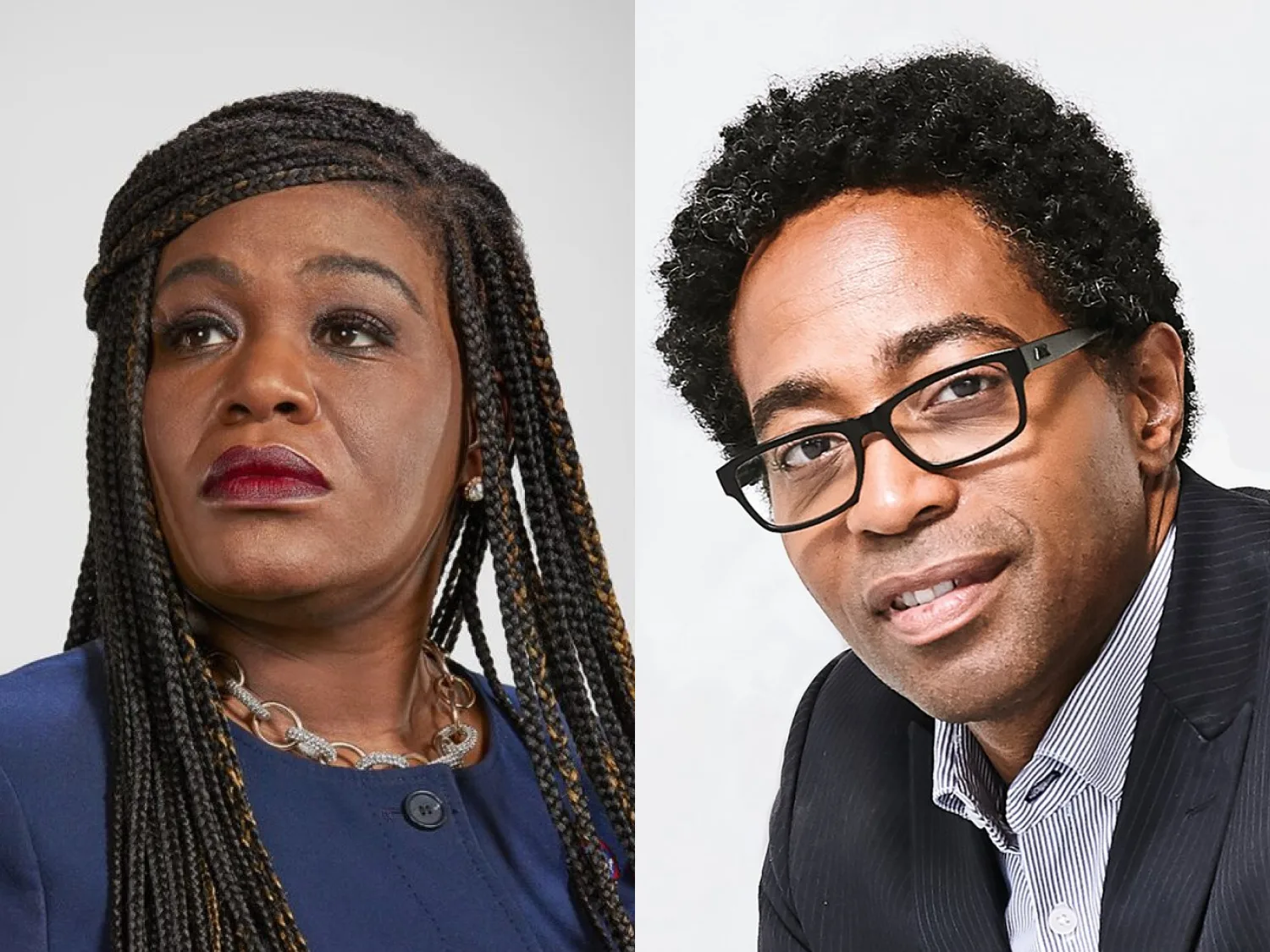
St. Louisans have already been going to the polls for almost a week as incumbent Representative Wesley Bell faces Cori Bush in a rematch of the 2024 race. Which candidate wins depends on who turns out and, thanks to voters’ increasingly availing themselves of early voting, the tea leaves are hard to read. But nonetheless, it looks like Bell might have a slight edge.
Conversations with election directors in both St. Louis city and St. Louis County show that, compared to two years ago, turnout is trending up in the county and maybe in the city as well, although for the latter it is too early to tell.
Get a fresh take on the day’s top news
Subscribe to the St. Louis Daily newsletter for a smart, succinct guide to local news from award-winning journalists Sarah Fenske and Ryan Krull.
Eric Fey, the Democratic director of elections for St. Louis County, says that based on the first days of early voting, he’s guessing turnout for the August primary in the county will come in around “35-ish percent.” Two years ago, turnout was just over 30 percent.
Meanwhile, in the city, Democratic Elections Director Ben Borgmeyer says that even though about twice as many city residents voted early in the first days of no-excuse early voting compared to last year, it’s still too early to predict overall turnout. (Turnout in the August 2024 primary was a hair under 30 percent.) Are these frequent voters trying out a new way to vote or are these non-voters finding themselves inspired? Right now, he doesn’t know.
The answer to that question could have big ramifications for the race’s outcomes, as the difference between city and county turnout really does matter for the Bell-Bush rematch. Two years ago, Bell bested Bush by about five percentage points, 51–46. Bush won the city, but that wasn’t enough to overcome Bell’s county advantage.
“She needs voters in St. Louis city—that’s where she does better,” says Anita Manion, a professor of political science at the University of Missouri St. Louis. “She needs them to turn out, and to turn out at high numbers, and vote for her if she wants to win this election.”
Manion says some national trends are providing wind at Bush’s back. There is energy around Israel and Gaza, which could drive turnout for Bush. The primaries held elsewhere this year have also shown Democratic primary voters opting for outsiders instead of candidates favored by party brass.
That said, she adds, “Wesley Bell is the incumbent. He did win last time. He won St. Louis County, and voter turnout in the county tends to be higher than it is in the city. And there’s just more voters in the county than there are in the city.”
Another factor potentially helping Bell is the new Missouri congressional map pushed by President Donald Trump and approved in a special session of the legislature last year. The map made Missouri’s congressional districts more favorable to Republicans by gerrymandering away Kansas City’s district. The 1st District that Bell represents was relatively unaffected, but its slight shift to bring in more county voters nudged the electorate to be somewhat more favorable to Bell.
Bell has also outraised and outspent his challenger this cycle, bringing in $3.6 million over the past year and a half, with around $1.1 million of that as cash on hand. Bush raised $1.2 million over that same time period and as of July 15 had less than $100,000 in the bank.
Outside groups have exceeded those tallies. The pro-Israel lobbying group AIPAC has dropped $2.5 million against Bush, via its United Democracy Project. Another group that supports centrist Democrats, the New Democrat Majority PAC, spent $1.1 million in support of Bell.
Those sums are paltry compared to two years ago, when spending on the race by campaigns and outside groups ran to over $18 million, making it then the second most expensive congressional primary in history. The United Democracy Project, for example, spent three times as much in that race than the current one.
The decreased salience of the Israel-Gaza issue was seemingly on display Friday, when the candidates participated in a “joint appearance,” likely the closest thing this race will get to a debate, on St. Louis Public Radio. Bush and Bell seemed to basically agree to disagree on matters of the Middle East. He said we needed to support all our allies: Taiwan, Ukraine, and Israel. He added he was no fan of Israel’s current prime minister.
Bush said that she’s in favor of cutting off military aid to Israel, but is open to sending other types of money to the country, a position actually more moderate than the most ardent Israel antagonists who call for boycott, divestment, and sanctions.
The two candidates did, however, trade barbs on the matter of the federal government’s response to the May 16 tornado, as well as who could more effectively work across the aisle.
Bell accused Bush of fundraising off the tornado, only to line her and her husband’s pockets with some of the cash. Bush accused Bell of not getting more money for the city and for going to a Cheesecake Factory the night of the disaster.
Bell also took Bush to task for not working with Republicans or even with leaders on “her own side of the aisle,” noting that she was sometimes at odds with then-President Joe Biden.
Bush rebutted this by noting she worked with then-Senator Roy Blunt (R-Missouri) to get disaster aid for the city following flooding in 2022. Bush also pointed to public kudos she’d gotten from Senator Josh Hawley (R-Missouri) following the passage of the Radiation Exposure Compensation Act, providing compensation for St. Louis County residents poisoned by radioactive waste.
Voters casting a ballot for either Bush or Bell will also be weighing in on Amendments 4 and 5, which would make it more difficult for voters to amend the state constitution and do away with the state income tax, respectively. Both were put on the ballot by the Republican legislature and are uniformly opposed by Democrats (the extent to which rank-and-file Republican voters support either item remains an open question).
But Manion notes that, given the fact that the Bush-Bell primary is one of the most hotly contested primary races in the state, turnout in St. Louis will likely be higher than in other regions. And regardless of whether those primary voters vote for Bush or Bell, they are almost certainly going to vote no on 4 and 5.
Says Manion: “If Bush/Bell would gin turnout in the city and county, that could be bad news for those amendments.”